
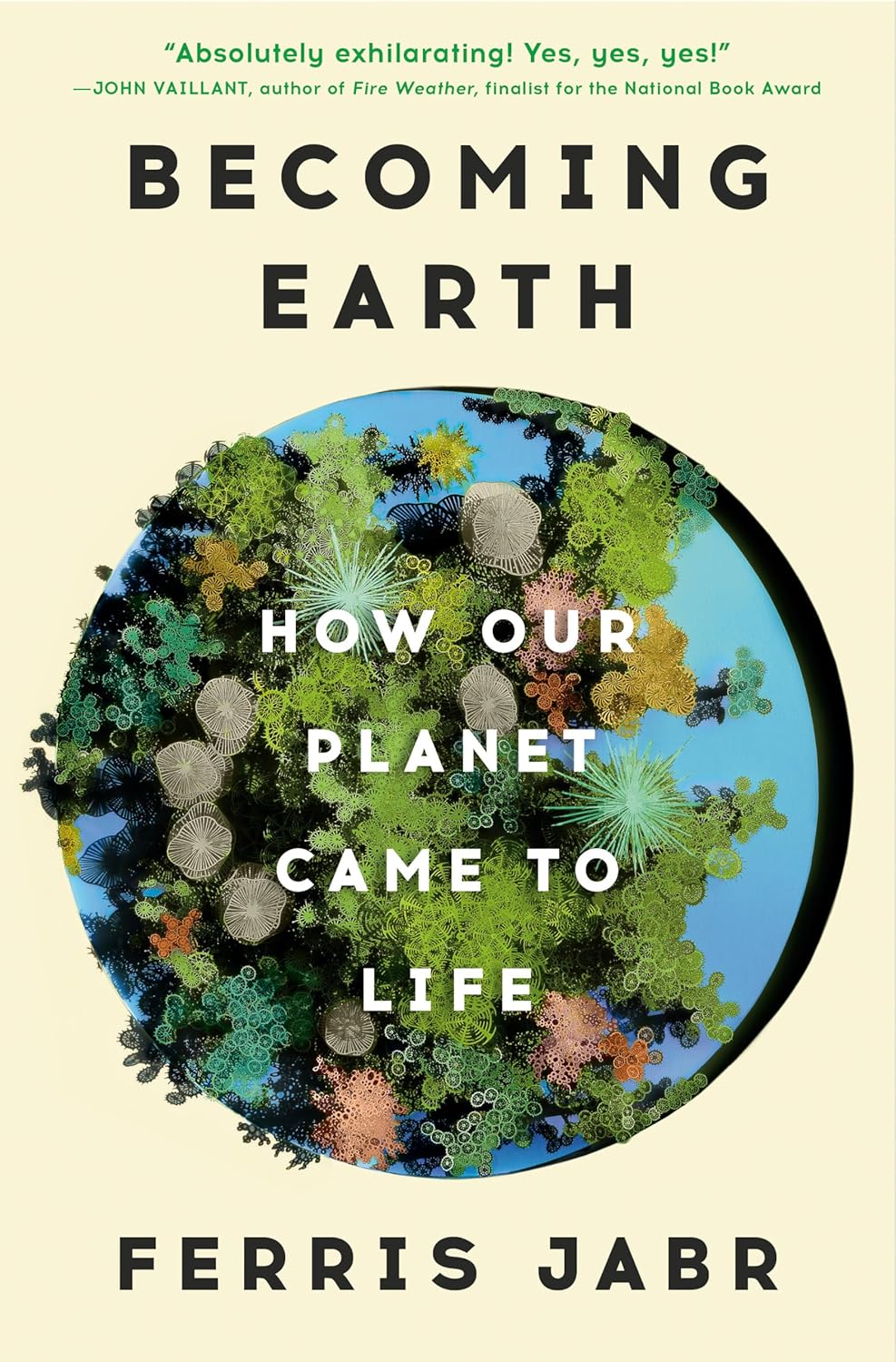
Synopsis:
I think Peg, who selected this book, should be called Deb (for Debbie downer!). As everyone in the club knows, I like stats. Defiantly the statistics provided (and shown below) provides support the thesis that the people around the world needs to take a serious look at the earth’s atmosphere (breaking it down to carbon). The stats below interest me. Further reading could be looking at the “futuristic camp”. We all just need to SAVE THE EARTH!
- Without nitrogen fertilizers two out of every five people would not exist p. 93 (1910’s)
- chemistry to restabilize ands life to recover. P. 136
- Est 1.8 trillion pieces of plastic of two hundred pieces of plastic for every person on earth. P.169
- We can’t expect our planet to clean up our mess p. 186
- Ocean is 30% more acidic than they were in 1850.
- Smoky Bear is the biggest public service announcement campaign in US history p. 230
- Ecosystems may not compete and reproduce the way organisms do p.249
- 90% of fires are self-regulated p. 242
- Need to use indigenous practices for fire control p.246
Get ready for some lefsa at our Dec. meeting
Introduction
- Life has been shaped by our planet
- Is earth the living enemy?
- Is the earth alive?
- Hoe life relates to the environment.
- Book show great power of our living world
- How life has transformed the earth
- It’s all about transformation
- The earth rewrites our history
- Talk about the science of life
- Earth is a living planet
- copyright 2024 and 2025 by Penguin
- its through the hidden wonders that brings our planet alive
- All that you touch, you change, which changes you
- Life summons rain (ex: Amazon)
- About 20 billion tons of water vapor is released from the Amazon each day (from tress) (p. 14)
- This water creates a ripple river effect
- Life belongs on earth because life can support life
- Activates on one continent influenced growth on others
- Photosynthesis nearly 2.5 billion years ago created microbes called cyanobacteria that permanently altered the planet. Offering oxygen ozone elayer and creating new life (p.17)
- Microorganisms is important for the earths minerals (p.18)
- Earth is alive (studies have shown p. 19)
- Our planet is like a living rock (p.21)
- Being alive is a living entity .-(no question) p.22
- Though it doesn’t eat or reproduce p22
- Virus can’t reproduce
- Living system uses free energy to maintain ITSELF p. 23
- Earth is the most difficult to comprehend p. 24
- Earth kept cycle of water/air/volcano p.24
- Replace fossil fuels with clean and renewable energy sources p. 26
- Earth has rock, water, and air. Earth is 4.54 billion years old est.
Rock
- In 2006 the Barrick Gold mine was donated to South /Dakota go up to a mile underground
- Tunnel was 100% humidity and was very warm p. 31
- Life was “gushing” from the rock
- Earth’s interior is not vacant p.34
- 80 percent of microbes
- Earths frame melted an created a crust p. 35
- 10 to 20 percent of the biomass-all the living matter p.35
- Rocks is not support ive of life until a has over 500 microbe was found in mile (as old as 1 billion days old) p.40
- Depending on radioactive between rocks and water P.40
- Microbes were found between .62 and 1.86 miles under ground p. 41’it adapted to the subterranean life p. 41
- Drop of rock and water sometimes create a cell (like a jumping bean)
- Microorganisms chew through rock P.45
- Microbe transform the varies crust of the earth P.46
- Microbe breath sulfide p.46
- Earth has over 5,000 distinct mineral species (like crystals) p.47
- Minerals can only be created in a high oxygen area p.47
- Its all about biological evolution p. 48
- 80% of methane is produced by microbes p.48
- Fungi and plants degrade rock p.51
- Once plants are abundant above ground all the people in the spirit emerge and thrive. P.51
- Thought that earth was all water p.51
- Mushrooms materialize from dirt overnight p. 52
The Mammoth Steppe and the Elephant Footprint p. 54
- Lying 90 miles off the coast of Russia
- The mammoth has survived there for over 6,000 p,56
- Today there are more than four hundred plant species at Wrangel’s soil p. 56
- Russia has made this place a federal nature reserve p. 56
- Only snow geese live there
- Humans were gnats
- People come for the wildlife p. 56
- Research shows the arctic had mammoths (animals)
- 20,000 years ago climate change started p. 60
- HUMANS were gnats to kill some of the animals (super predators) p. 60
- As humans expand animal species became extinct p. 61
- Start of GM 10,000-50,000 years ago P. Sergey from Russia was big on global warming p. 66
- Permafrost developed more carbon dioxide
- In the 90’s the government gave Sergey some land. P.67
- Earthworms help the soil p.71
- Fewer than 8,000 bison’s
- Beaver shaped our plant topology P. 72
- Whales move carbon to the deep sea P.73
- Animals are important for the plants nutrient system
- Serengeti is a carbon sink P. 77
- They want to bring back the mammoth p. 78
- Grazed soil stores more carbon due to enhanced fertility.
- Climate change is already here. We must do something
- Servey held his ground well herding some bison p.84
Chapter 3 A Garden in the Void
- The author had land and had desire to use the land p. 86
- Cropped turf grass offers little food or habitat p. 87
- Need to have a good foundation to start a garden p. 88
- Now about half of the land is used for garden/ growing space P.88-9
- Plows are about 2,700 years old p.90
- Need nitrogen for plants to grow p. 91
- All life needs nitrogen p. 91
- Microbes aree needed to break down nitrogen p. 92
- Development of ammonia in Germany is 1913 (help food cricis) p.93.
- Without nitrogen fertilizers two out of every five people would not exist p. 93 (1910’s)
- Then the Green revolution took place this has degrade our soil p. 94
- The Haber-Bosch process demands 2% of the worlds energy and contributes 1.4% of global carbine dioxide author filled h.
- The author filled their back yard will fertile earth p. 95
- Soil is new to the earth’s development p. 06
- Mineral particles and gravel, sand, or silt, clay p. 97
- About 280 million years ago, the forest covered mosat of the earthnP. 98
- The caron cycle started 400 million years ago p. 98
- Soil est. stores between 2.5 and 3 trillion tins of carbon p.98
- Key part is humas, its more stable
- This is 3 times more carbon than the atmosphere and about 4 times as much as in living plants p. 99
- Is soil a soil? No, it’s a living enemy p.99
- Soil is a living thing p. 100
- Make sure the soil is not bare p. 101
- Soil is the most complex biomaterial that we know of in the earth p. 103
- Less carbon is entering the soil. (like defoliate, synthetic fertilizer) p. 104
- Over past 12 thousand years, agriculture has resulted in loss of 116 billion tons of carbon from the plants and soil which consists of about 17% of the carbon humanity has released in the atmosphere. P. 103
- We want to agitate soil the least as possible p. 106
- Plant cover crops
- 37% of farming in the crop land uses no-till farming p. 106 or 14.7% of the worlds cropland
- Government must pay Farmers to build soil p. 108
- Trees stabilize soil P. 108
- We need to give back to the soil p. 109
- There are the sweat bees – a native P. 113
- The world is a passive garden p.113 sowed and nurtured itself p. 114
Water
Sea Cells
- Little creatures like plankton are needed for water dwelling system
- Thoughts of hundreds of thousand
- Plankton like to drift p.120
- They are also useless swimmers (drifting)
- Plankton can change the planet. P. 120
- For every plankton you can see about a hundred you cannot p. 122
- About 530 million years ago came the fish p. 123
- A plankton (type) can grow 7 inches long p. 1226
- Plankton support all the sea fish (food) P. 127
- Without plankton the ocean would collapse p. 127
- Earth is one system and plankton makes the earth fuction p.129
- Plankton has nitrogen and phosphorous p.130
- It all goes back to carbon, the “thermometer” p.13
- Building are a monument to ocean life p.134
- Ocean is 30% more acidic than they were in 1850.
- It would take between tens to hundreds of thoudand of years for th eocean chemistry to restabilize ands life to recover. P. 136
- Plankton is important to sand and coral P. 137
- Sea air is like sea life P.137
- Plankton shaped the nation p. 137
- Plankton is used for a structure, or anytinh. The earth needs plankton p. 141
- Yes, even plankton poop P. 141
Chapter 5
These Great Aquatic Forests
- At Catalina Island
- Giant kelp can grow 2 ft. per day
- 150 fish eat kelp
- Kelp is one type of seaweed P.147
- Alge has simple anatomy p. 147
- Kel doesn’t create seed p. 148
- Kelp shits down sun and alters current, and wave types p. 149
- Seaweed is in the global carbon sink. P.150
- Seaweed has been found at a depth of 4 miles p. 151
- It secretes sugar that only special bacteria can consume p. 151
- Kelp can grow several feet per day p. 153
- Oysters improve water quality p. 155
- Talk of the company running tide p.156
- Discussion of possible issues p. 157
- Ginic acid from seaweed p. 159
- About 30 million metric tons of seaweed are farmed around the world P. 160
- Seaweed is well eaten p. 160
- Norway has an expanding seaweed farm (kelp)
- About 9 percent of the ocean was seaweed the CO2 draw down would be helped p. 161
- Livestock contributes 15 percent of CO2 P. 163
- Humans are putting our planet into crisis’s p. 166
- We need to work with earth p. 166
Plastic Planet chapter 6
- Big heap of Kamilo was named the plastic beach in the pacific ocean. P. 169
- This is at the south eastern tip of Hawaii p. 168
- Plastic pollution in the Pacific ocean p. 169
- “The Great pacific garbage patch”. p. 169
- Est 1.8 trillion pieces of plastic of two hundred pieces of plastic for every person on earth. P.169
- “We” have destroyed the seas floor (it’s more acidic and warmer)
- Polymer is of many pieces p. 173
- Since 1950 the world has produced 83 billon tons of plastic p.174.
- Plastic is a type of fossil fuels p. 175
- Every year 8 to 12 million tons of plastic trash spill into the ocean p. 175
- Its projected that this plastic will float to 150 million tons per year which is nearly twice the weight of fish caught annually p. 176
- Plastic pollutes everything on earth p. 176
- Plastic rearranges existing molecules p. 178
- Plastic is killing whales p. 180
- American people ingest between 94,000 and 114,00 tiny plastic particals every year. P. 182
- There is also nonneoplastic p. 182
- Researches think 94,000-114000 nano plastics are inhaled each day p. 182
Nano plastic effects plankton BIG ISSUE P.182
- Plankton is less dense than water p. 183
- Most plastics are made from petroleum. P. 183
- There are 430 species that can digest plastic p. 185
- We can’t expect our planet to clean up our mess p. 186
- The throw away culture p. 188
- Goal is to see the planetary process. Promotes 4 % of greenhouse
- gases
- The human economy as a substance of the living economy p. 192 (Gia hypothesis)
- we all have life cycles p. 193
- talk of Kamilo cleanup p. 195
- have removed 320 tons of plastic. Because of currents debris will continue. P. 196
- Cleanup is the act of volunteering p.197
- Plastic shows only 5 percent is being recyucled p.199
AIR
- taking from the tall tower in the Amazon P. 200
- climb 1,500 narrow steps
- This tower was used to see the Amazon make its own rain p.201
- half the tower was 533 feet p.202
- earth was a created by plants and life several billons years earlier, it’s all about life p. 204
- Without life the earth would not b that fluid P.204
- water needs an ice nucleus p.204
- ice nuclei is part of the ice system P.208
- Snow crystal was developed p.208
- microbiology as important for microorganisms p. 209
- micro nuclei protein is thought to have started about 1.75 billion years ago p. 209
- for 2 and 3.5 billion years ago, organisms had only one cell p. 210
- plant thrived by fungi and microbe’s p. 211
- Trees have everything to do with clouds p. 211
- Specimens change their living environment p. 212
- The more it rains, the more plants grow. It generates about ½ the rain it needs p. 215
- Humans have destroyed 18 percent of the amazon (for cattle) p. 215
- Amazon store much carbon p. 216
- Oxygen is 21 percent to the atmosphere p.216
- A cloud is like a lake p. 221
- The planet is the largest living system p. 223
- Earth
- evolving p.223
Chapter 8 The Roots of Fire
- talk about human services for ecosystem (picking out acorns) p.227
- use fire to change environment through your own benefit p.228
- deliberate burning helped stimulate biodiversity for native people p. 229
- Smoky Bear is the biggest public service announcement campaign in US history p. 230
- most fires were in California p. 231 they even generate environmental change.
- For fire we must manage it p. 231 (need controlled burns)
- Fire requires fuel, oxygen and heat p. 232
- Plants release oxygen as a waste product p. 235some plants need smoke to reproduce. P. 237
- An evening campfire is the symbol of development. P. 239
- 90% of fires are self-regulated p. 242
- Need to use indigenous practices for fire control p.246
- Fire needs to be part of the people p. 246about 200 million years ago the oxygen in the atmosphere changed p. 247
- The atmosphere today has oxygen at 21% p. 247
- Ecosystems may not compete and reproduce the way organisms do p.249
- Living system finds way to endure p. 250
- We need to survive together p. 252
Chapter 9
Winds of Change
- We need clean energy p. 256
- Don’t disrupt the earth p. 256
- In 1890 coal surpassed wood p. 259
- 64% fuel is from fossil fuels p. 259
- emissions
- Half of the world has produced 86 percent of all CO2 emissions P. 260
- Carbon is being released so quickly p. 262
- The temperature rate increased by 2.16 F p. 262
- Sea level increased by 9 inches p.263
- Source of COVID-19? P.264
- Will climate change hurt the diversity of the worlds health p.265
- Clime works for carbon capture p. 269 (seal it in the earth)
- Heirloom is another air capture company. P. 269
- Is air capture a moral hazard? P,270
- Need to plant trees p.270
- Reach into the sky’s and revoke some on the sin p. 271
- Talk of how we should adapt p. 273
- 1.5 degree C is a boundary of extreme weather p. 274
- 2015 was the Paris Accord p. 274
- Glasgow climate act by the United Nations p. 276
- Wind turbine is good for workers. P. 276
- Talk Not enough carbon of maybe the Amazone in South America p.279
- is not that critical the earth will freeze from pole-to-pole p. 281
- 1 ton of carbon = 3.67 tons of CO2 p. 283
- Maybe go nuclear – p. 283
Epilogue
- Anything alive can change planet p. 287 by James Lovelock
- The earth is one system p. 290
- Life is earth P. 292
- Will the planet take care of itself? P.293
- Futurists think that microbes will save the earth p. 293
- Earth being 4.54-billion-year-old, it’s not really that old to the universe p.295
- Earth shows us the need for community p. 295 and diversity!
- ATTO is the tallest tower in South America p.328
- Finance has become an issue and the carbon companies are going iut of business p. 345
Selected Sources p.347
 MG Buds book club